
Finding long-term housing in Japan can be a daunting task, especially for newcomers. In this guest post, Graham Hill offers valuable tips and insider knowledge to help you navigate Tokyo's rental market and secure a comfortable, affordable place to call home.
Graham: It all begins like this: You want to live in Japan. Your IT skills are valuable, and you are working with Paul to find a job. The plan is coming together nicely, and your offer to begin work with a Japanese company looks promising.
The next step toward a successful new life in Tokyo is to find a great place to live; it is time to find a great apartment.
Living in long-term housing typically costs less and is more comfortable than other options. As a service to Paul’s readers, here are our notes on finding an apartment in Tokyo, or otherwise setting up long-term housing in Japan, as the same processes and fees apply in other major cities such as Osaka, Fukuoka, and Sapporo.
Getting a Long-term Apartment in Japan Will Save You Money
One of the main reasons to go through the (admittedly difficult, and fee-ridden) process of getting a long-term apartment lease in Japan is to save money. Yes, Japanese apartments often come with extra fees, and yet, you will still save money. How could that be?
We will show you the move-in fees for a Japanese apartment (below), but for now, let us focus on the cost savings: The rent on a long-term lease in Tokyo is typically 30 – 40% less per month than for a short-term apartment, and 50% less than monthly rent for an equivalent Airbnb.
For this post, we did some specific research; we used the Daikanyama neighborhood (in the Shibuya section of Tokyo), and we looked at specific monthly rent price ranges for standard two-year leases and compared them to the cost for furnished/serviced apartments or Airbnb listings.
For the Daikanyama area, long-term apartments can be easily found in the 100,000 – 170,000 JPY per month range. For comparison, monthly “furnished” apartments (which are not the same as a standard Japanese apartment) in the same area are 150,000 – 300,000 JPY per month, which is about 50% more expensive. And then, Airbnb rentals in that neighborhood are listed at 350,000 – 400,000 JPY per month, about 100% higher than a standard Tokyo apartment lease.
There is a lot of money to be saved overall, and per month, if you can commit to signing a standard two-year lease. Even if you had to pay some fees at move-in (and you probably will), for most renters in Japan, long-term housing is much more cost-effective.
Having Your Own Apartment is More Comfortable
Short-term rentals in Tokyo will provide the basics you need to live, but will lack any sense of “home.”
If you love to cook, if you like plants in your home, or if you want to decorate in your own style, getting a two-year lease apartment will give you more opportunities to live the way you want.
Use Short-term Housing as a Home Base
It is possible to find an apartment in Tokyo quickly, but rushing through the process is not necessary – and will not lead to the best options. Instead, consider taking advantage of short-term housing to use as a home base while you search for something more long-term.
For your first few days, hotels are a convenient, safe, and comfortable option; it could be practical to stay in a hotel until you find an apartment. If you want to save some money, or if more space would be preferable (Tokyo hotels are notoriously small), you could book a short-term rental of a serviced apartment or an Airbnb. Use that short-term place for a few weeks, to give you the time you need to explore Tokyo and to gain some experience with what the city has to offer.
Whichever option you choose to start, having a comfortable place to stay for a few weeks will allow you to relax, and take the time you need to make an informed choice for your long-term accommodations.
Online Apartment Listings for Tokyo
As you begin your search for a new home in Tokyo, it is part of modern life that most of us turn to the internet.
Many online sources list Japanese apartments for rent. Especially at the beginning of your search, you can use online apartment listings to set some expectations about average rent for an area. There is good information there, but don’t fall in love with any particular property you see as you first go online.
Because your apartment will be important to you, and because there will be a large investment of cost and time to get set up, take your time with the process. Consider finding an independent real estate agent that can help you identify neighborhoods that would be good for you, help you sign a lease, and maybe even help negotiate better terms than you can get on your own.
Japanese Apartment Rental Agents
Particularly if you are not local, you will benefit from working with an agent that can show you local apartments for rent in Tokyo, communicate with the owners or property managers, and help you negotiate better terms.
“After having lived in many major metropolises around the world, I feel safe to say that Tokyo's rental market stands out as the most intricate and complex. Navigating this complicated system requires understanding fees, customs, and unique practices that can be quite bewildering for newcomers, and even for some Japanese locals.”
Anton Wormann, from Free Houses in Japan
As you get started, go meet with two or three local agents. Let them show you some online listings and talk with those agents about what you want. Tell them where you are going to work, and what you want in terms of lifestyle – they might be able to recommend specific neighborhoods that will work for the way you want to live.
Most real estate companies in Tokyo only provide services in Japanese. However, more than any other location in Japan, there are certainly apartment rental agents in Tokyo that can do business in English. There are even some rental services (like Apts.jp) that specialize in helping foreigners find apartments in Tokyo.
There is a national database for Japanese apartments for rent that can be accessed by any professional Tokyo rental agent. Look for an agent that makes you feel comfortable, and will take the time to help you find an apartment that suits your needs.
Having a Job Will Help You Lease an Apartment
When you meet with apartment brokers in Tokyo, among the first questions you will be asked will be inquiries about your visa status and your employment. If you are working with Paul as your recruiter, you are already down the road toward being an attractive tenant.
Having a permanent job in Tokyo (particularly from a well-established company) will improve the strength of your application as a renter.
Depending on where you work, your company may have good recommendations for real estate agents and other services related to finding a place to live.
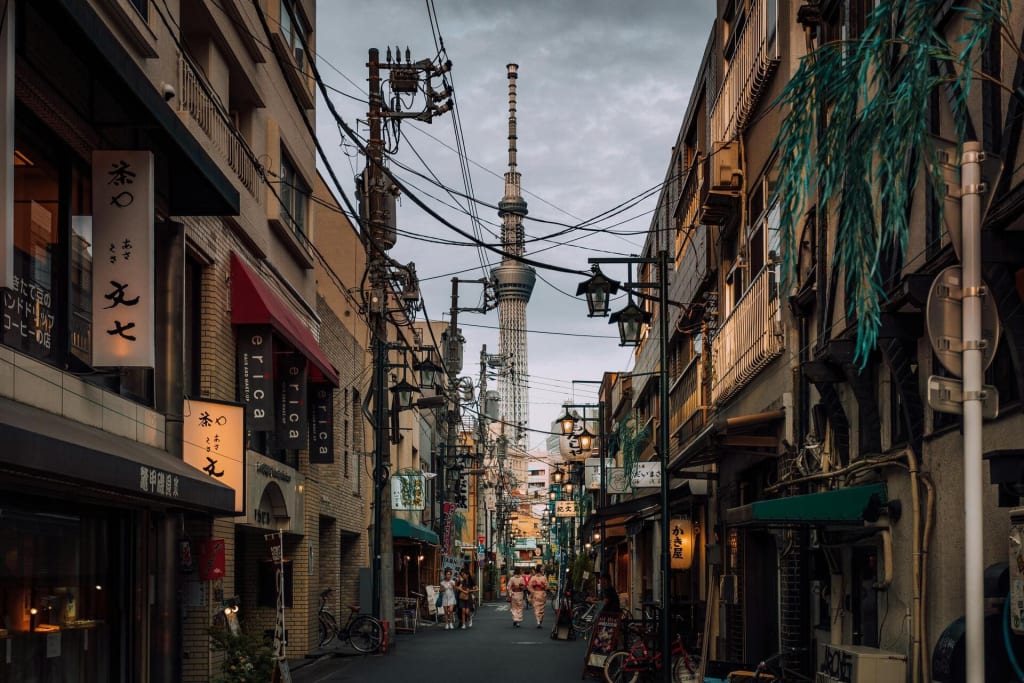
Choosing a Neighborhood in Tokyo
Tokyo is a really big city; either the biggest city in the world (if you count the metro region) or in the top 10 (if you count the city of Tokyo more narrowly). Tokyo offers many different types of neighborhoods, each with its own lifestyle benefits.
The first step in finding a good neighborhood is to spend some time exploring what Tokyo has to offer; begin with where you are going to work.
If you are a foreigner working for a Japanese company in Tokyo, your relationship with your employer will be essential to life in Japan. On foot, via bicycle, or by train, you will commute to work most days, and where you live will have a big impact on that commute. If you want a short, easy commute, living within walking distance may be the right decision for you (and will help narrow your choice of neighborhoods). Or, it may be better to live just a few train stations away from work, which will minimize commute time, and allow you to live in a neighborhood that is more ideal for your lifestyle.
You can use your daily preferences to help you discover neighborhoods that fit your needs. If you like to exercise, go visit some local gyms in neighborhoods that are close to where you will work. If you like to eat out, or eat a particular kind of food, go visit some restaurants. If you like nature, explore some of the local parks. Each of these adventures into the city will give you exposure to more neighborhoods. Look for a neighborhood that is close enough to work, but helps deliver on these lifestyle benefits.
In your first few weeks in Tokyo, it can be a good strategy to go out a lot (you will not have to keep that pace up forever). Taking a lot of little trips around the city will be a good way to get the personal experience you need to make an educated choice about a neighborhood for a long-term lease.
Apartment Move-in Fees
When you move into an apartment in Japan, you will pay a range of one-time (and sometimes recurring) fees that include; a security deposit (potentially refundable), a fee for the real estate agent who helped you find the room, the gratitude fee or “key money” (which is a gift to the landlord), a fee for the guarantor company, renter’s insurance, and potentially both a cleaning fee and a key-change fee. It is commonly assumed that the total cost to move into an apartment in Japan is approximately 5X – 7X the monthly rent for that unit.
These fees make the cost of moving into (or changing) apartments much higher than in most other countries. The higher fees are one reason why the Japanese change apartments less often than other countries.
[J]ust 8.3% of Japanese renters move each year, compared with 25.6% in the United Kingdom and 30.1% in the United States.
Landed Japan, by Christopher Dillon
If preserving money is important to you, use these higher costs as encouragement to take your time as you find a new place, and to make sure it will be a place you can stay for months (or years).
Despite the higher fees – renting a typical apartment in Tokyo will still save you money versus a short-term option. If move-in fees are 5X – 7X your monthly rent, but the prices for alternatives (like short-term furnished apartments or Airbnbs) are 50 -100% more per month compared to a long-term apartment, you will typically begin saving money sometime after the sixth month.
You will save a lot of money with a long-term lease, even after you pay all the fees.
Negotiating Your Lease
In any negotiation, you can improve your position by leveraging money, time, and information. You can put those angles to work as you (and your agent) negotiate an apartment lease in Tokyo. When working with your agent, focus on the price of rent, the fees to move in, renewal fees, and other important terms of the lease.
[R]ental properties all over Japan are in a surplus, which means rental properties are competing quite fiercely. It's a tenants’ market.
Toshihiko Yamamoto, The Savvy Foreign Investor’s Guide to Japanese Properties
Some apartment owners might accept a monthly rent payment below the listing price, some fees (particularly “key money”) can often be waived, and as some fees are reoccurring, your agent can work with the owner to remove some of those fees from the contract. And while these leases are structured for “two-years,” your agent can commonly ensure you can leave the lease early (if you need to), with no penalty, assuming you give proper notice. Find a good agent, and ask about these items as you consider your options.
A bigger budget will help get you what you want, but if you use the information here about what aspects are negotiable, and you use time to allow your agent to find more owners that like your terms, you can negotiate the same or better value for less money.
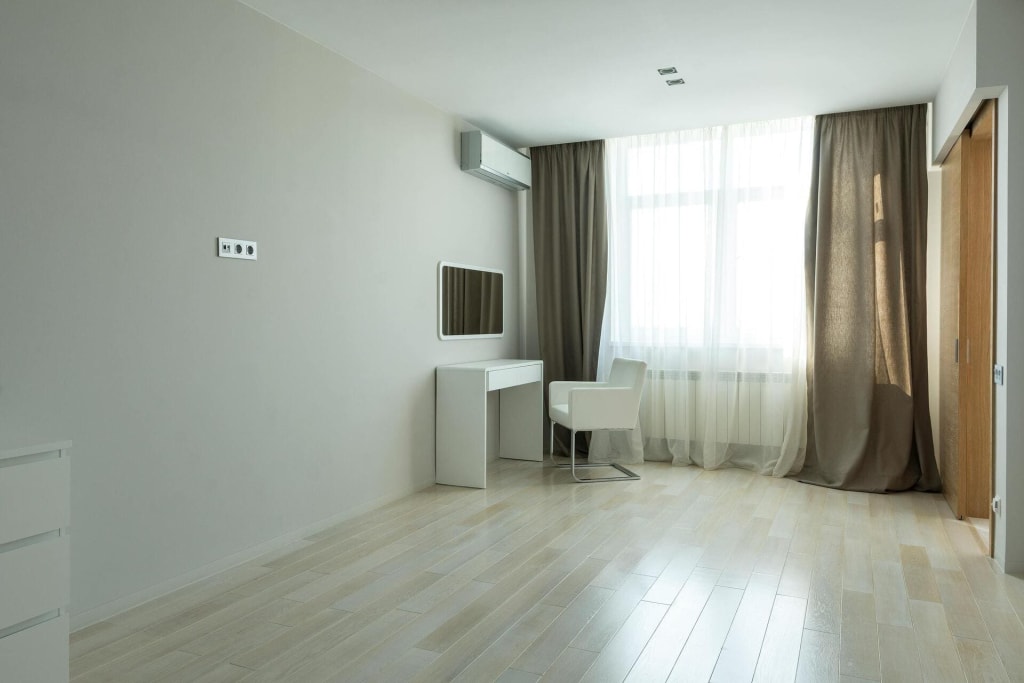
Long-term Apartments in Japan are Unfurnished
One challenge for any renter, but maybe more so for most foreigners living in Tokyo, is that Japanese apartments come completely empty – not even a refrigerator. Coming up with the basic living essentials is another challenge as you begin your new life in Japan.
Knowing that your new apartment will come empty might give you a head start with getting what you need to make that apartment livable. Buying a refrigerator is key. While there are many coin-operated laundry businesses in Tokyo, a washing machine is probably a good idea as well. Most Japanese do not have a clothes dryer, but some machines can serve as both washer and dryer.
Along with a bed, a place to sit, a table and perhaps a television, these items will add to your cost. But if your time in Japan is beyond a few months, you will still save money, and you will have the comfort of being able to live to your own personal standards.
Go "Older," Buy Second-hand
The Japanese seem to have a strong preference for “new.” New real estate is priced considerably higher than older housing. And used home furnishing is less desirable in Japan than it might be in other countries.
If an older building is acceptable, you can likely get a better location, or more space, for the same budget. And when you go to buy the refrigerator and other furnishings, many of those household items are available used (in local stores in Tokyo, or online from Yahoo flea market and other services).
Buying a House in Japan Instead?
Considering the fees and expenses associated with rentals in Tokyo, buying a place to live is sometimes a more compelling option than renting.
Buying property in Japan will be a less common choice, but can be a good option for certain lifestyles. Tokyo has a lot of housing stock for sale, including many condominiums (called “mansions,” in Japanese). Particularly if you are open to an older building, you might find the price for a modest condo in Tokyo to be a good value. While older condos have less resale value, property prices in many of Tokyo’s neighborhoods are increasing, and higher resale value in the future (for some desirable locations) might also help make the case to buy instead of rent.
Moving into Your New Home in Japan
If you are new to Japan, you probably do not have a lot of possessions, so moving in will be relatively easy. Work with your agent to make sure your electricity, water, gas service (if any), and internet provider are set up in advance.
If you are relocating, and do need a mover – Japanese movers provide excellent service; they are clean and careful, a wonderful experience. And if you plan for a long-term move early enough, you may be able to have some important belongings from your home country shipped to Japan, and potentially held in storage by the moving company. If you work fast enough (and time it right), you can tell the moving company you have your new place, and specify the final location while the goods are in-transit.
And with that done you can settle into your new home, and begin to face the next major challenge: understanding the world’s most complicated trash system. But that… is a post for another time.
About the Author
Graham Hill writes about living and working in Japan and is an adviser for real estate company Find Hokkaido Agents, and a Sapporo-based restaurant guide ICHIBAN NO MACHI.
Looking for a new IT job in Japan? Check out my job board. Hiring? Get in touch and let’s see how I can help.
Join 1,000+ readers to receive my free newsletter.
1 monthly email with Japan IT job news, articles on tech & life in Japan, my insider insights, and more.
100% non-corporate and non-boring!
- No spam, ever. Email addresses are never shared. You can unsubscribe at any time.